
Delaware’s Forgotten World War II Hero: Wilmer Earl Gallaher at Midway – Part VI -The Aftermath
VI. The Aftermath
Gallaher was awarded the Navy’s top combat award, the Navy Cross, for his actions at Midway (Figure 7)7,27. The award read in part28:
“Participating in a devastating assault against a Japanese invasion fleet, Lieutenant Gallaher, with fortitude and resolute devotion to duty, pressed home his attacks in the face of a formidable barrage of anti-aircraft fire and fierce fighter opposition. His courageous aggressiveness and inspiring leadership were contributing factors to the success of our forces and were in keeping with the highest traditions of the United States Naval Service.”
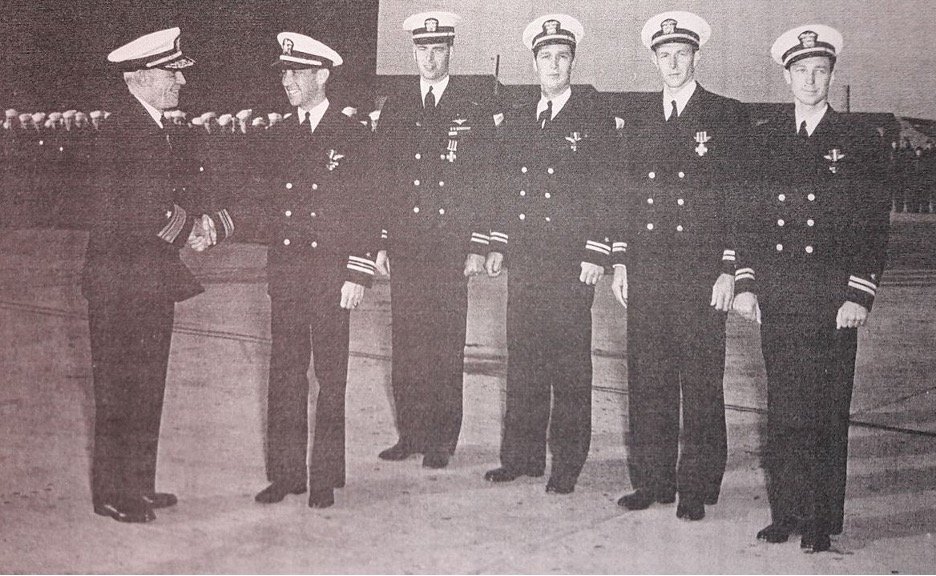
Figure 7: Navy Cross Ceremony held at Bronson Field, an auxiliary airfield located outside of Pensacola on November 28, 1942. Rear Admiral George D. Murray, the former commander of USS Enterprise, hands out the medals. Murray is shaking hands with now LCDR Wilmer Earl Gallaher. Fourth from the right is LT James Seton Gray, former commander of Fighting Squadron Six, who received a gold star on his Distinguished Flying Cross. Next to Gray (and third from the right) is LT Irvin H. McPherson, a pilot who belonged to Torpedo Squadron Six. McPherson was one of only five VT-6 pilots who survived the battle. Next to McPherson is LT Thomas Clinton Provost III, formerly of Fighting Squadron Six. At Midway, LT Provost shot down LT Michio Kobayashi, the commander of Hiryu’s dive bombers. Finally, the one on the far right is LT Nels Luther Alvin Berger, formerly of Scouting Five. At Midway, Berger participated in the diving attacks on the destroyer Tanikaze (damaged) and the heavy cruiser Mikuma (sunk).27
Previously, he had been commended by Navy Secretary Frank Knox for the raid on the Marshall Islands and received a letter of commendation for his participation in the Wake Island attack.29
Gallaher returned home to Wilmington on 14 August 1942 and was the keynote speaker at the Naval Aviation Rally at his alma mater, Wilmington High School.29 He was given a tremendous ovation by the audience of 300 people and told them that “that attack on the carrier was what he had been waiting for. ‘I had been dreaming of it since the war started.’”
Gallaher became commanding officer of the Naval Air Station at Pensacola in July 1943.30 By May 1944, he was executive officer of an aircraft carrier in the Philippines and Okinawa.3,30,31
He remained in the Navy after the war and had a series of staff positions, starting with the Naval War College.3,31 During the Korean War from 16 July 1951 to 9 July 1953, he was Commander Naval Forces Far East, for which he received the Legion of Merit.28
Two sea assignments followed: captain of the sea plane tender USS Kenneth Whiting (AV-14) from July 1953 to June 195432 and captain of the aircraft carrier USS Princeton (CVS-37) from 14 January 1956 to 19 January 1957 (Figure 8).7, 33
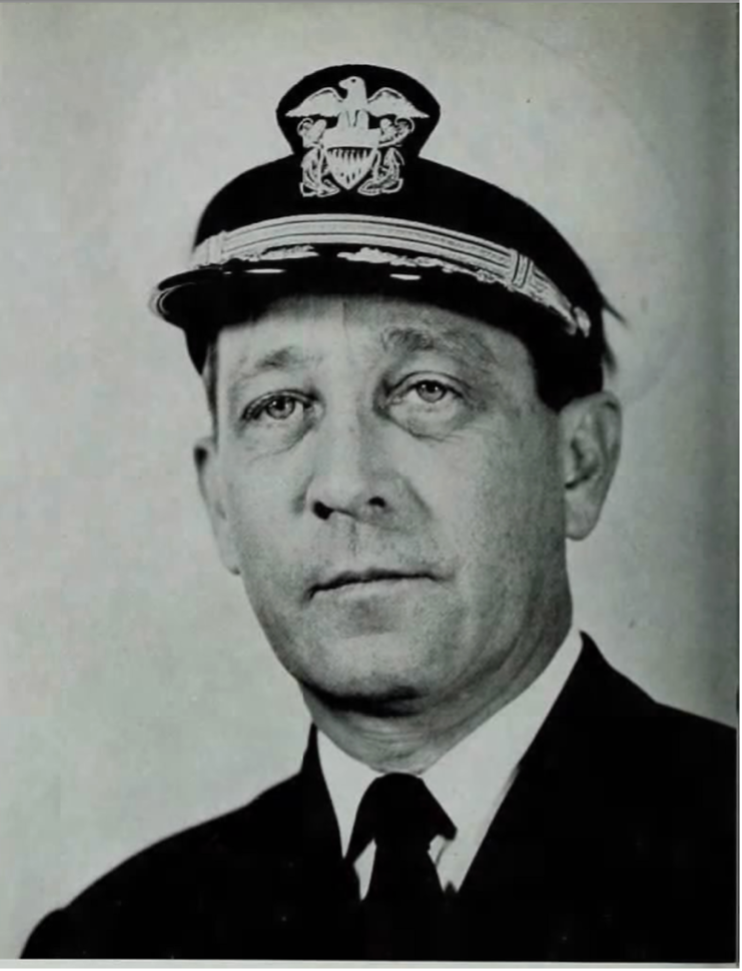
Figure 8: Command Photo, USS Princeton, 19566
On a personal note, he married Caro Miller on 25 August 1956 in San Diego, California.34
His final posting was as a liaison officer to the Supreme Allied Commander, Atlantic. Gallaher retired from the Navy in 1959, upon which he was promoted to rear admiral.10
He died of cancer 4 February 1983 at the Bethesda Naval Hospital and was buried at the Arlington National Cemetery, Arlington, Virginia31 (Figure 9). As Bill Frank wrote, “The funeral…was attended by an unusually large number of high ranking naval officers.”3 (Appendix B). He was survived by his wife Caro nee Miller, son Albert, and a sister, Elizabeth Sharman, still living in his Wilmington, Delaware hometown.
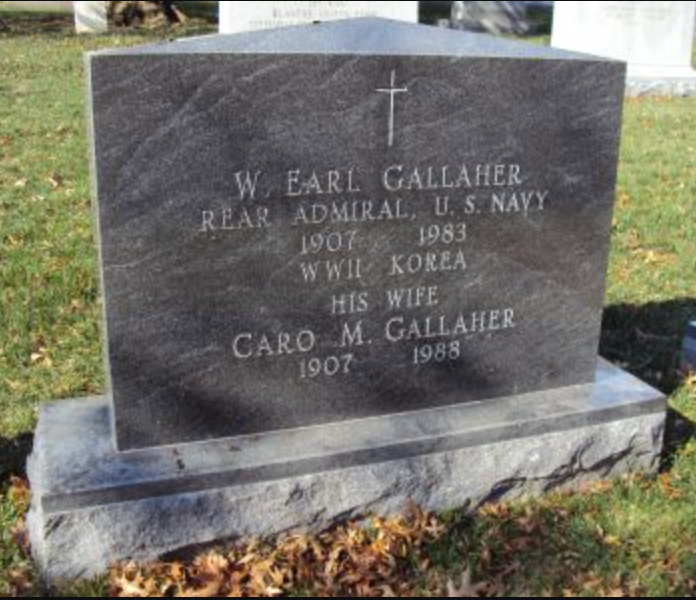
Figure 9: Internment, Arlington National Cemetery35
© 2026 Mark Weinberg. Published by the Delaware Genealogical Society.
Updated 9 April 2026